Search this blog


Home About Contact
2009年12月31日星期四

Ten design tenets of Dieter Rams  

Earlier this month, Clearleft went on a company outing to the Design Museum in London. There we spent some quality time perusing the work of the influential former Braun industrial designer, Dieter Rams. Accompanying the exhibition were these design tenets penned by the man himself.

Good design…

Is innovative

The possibilities for innovation are not, by any means, exhausted. Technological development is always offering new opportunities for innovative design. But innovative design always develops in tandem with innovative technology, and can never be an end in itself.

Makes a product useful

A product is bought to be used. It has to satisfy certain criteria, not only functional, but also psychological and aesthetic. Good design emphasises the usefulness of a product whilst disregarding anything that could possibly detract from it.

Is aesthetic

The aesthetic quality of a product is integral to its usefulness because products we use every day affect our person and our well-being. But only well-executed objects can be beautiful.

Makes a product understandable

It clarifies the product’s structure. Better still it can make the product talk. At best it is self-explanatory.

Is unobtrusive

Products fulfilling a purpose are like tools. They are neither decorative objects nor works of art. Their design should therefore be both neutral and restrained to leave room for the user’s self-expression.

Is honest

It does not make a product more innovative, powerful or valuable than it really is. It does not attempt to manipulate the consumer with promises that cannot be kept.

Is long-lasting

It avoids being fashionable and therefore never appears antiquated. Unlike fashionable design, it lasts many years – even in today’s throwaway society.

Is thorough down to the last detail

Nothing must be arbitrary or left to chance. Care and accuracy in the design process show respect towards the consumer.

Is environmentally friendly

Design makes an important contribution to the preservation of the environment. It conserves resources and minimises physical and visual pollution throughout the lifecycle of the product.

Is as little as possible

Less, but better – because it concentrates on the essential aspects, and the products are not burdened with non-essentials. Back to purity, back to simplicity.

Read or add comments

2009年12月30日星期三

Color In Film: M. Night Shyamalan  

M. Night Shyamalan is known for, among other things, his use of color symbolism. In his first major hit, The Sixth Sense, the color red was used to indicate a connection to the dead and forewarn that something was about to happen. This was viewer's first taste of the kind of color symbolism that would continue to saturate his work. Ever since then, viewers have been paying close attention to every reoccurring hue, theorizing of its meaning and importance in Shyamalan's films.

Below, we take a look at some of the color symbolism used in his films with the help of discussions, interviews and essays on his use of color.

The Sixth Sense

red__white

In his classic The Sixth Sense he intentionally inserted bright red objects as a symbol that something ominous was about to happen. - irregural.com

His systematic use of red in The Sixth Sense to indicate some connection with the world of the dead. - Senses of Cinema

sixth-sense

2009年12月29日星期二

Where To Find Free Colorful Yarn Patterns Online  

Suzane Smith sent over the ink to her post 25 Best Places to Find Knitting Patterns Online to share with the community, and we're glad she did. If you like to nod your head to the knitting beat then you might want to check it out. And even if you're a non-knitter there is plenty of color inspiration to be found in the yarns and patterns on these sites.

Below is a selection of sites and descriptions picked from her list. You can see the complete list and reviews here.

Few online communities are as welcoming and open to beginners as those devoted to the ancient craft of knitting. In order to promote an appreciation and love of the utilitarian art, they provide thousands of free patterns for personal, charitable, and occasionally commercial use. Ranging in skill level from the very basic to the masterful, they all provide an excellent service for those seeking to personally craft their own wardrobe and home, give a highly personal gift, or donate to a beloved charity.

Ravelry

raverly.com

Ravely easily exists as the most bustling knitting community on the internet, where hobbyists and professionals alike gather to share their projects and experiences, show off their yarn stash, and â€" of course â€" post knitting and crochet patterns. Every skill level of every possible project imaginable can be found on the 500 pages dedicated solely to completely free instructions. Even more are available directly from the designers for a fee. Smaller special interest groups have sprung up within the larger site as well, making it even easier to look for patterns conforming to highly specific needs and interests.

Plenty of color inspiration even for non-knitters, as you can see from the winners of Ravelry's Dye For Glory Competition.

apogeeballskein_medium

2009年12月28日星期一

The Colorful World Of Snowflakes  

We know that ice crystals are clear and snow is white, but if we take a closer look at snowflakes (or snow crystals) it can give us a new perspective into the colorful world. Luckily for us we have the internet, and with the help of snowcrystal.com we can further explore these physical marvels.

w040122a091
world_of_snowflakesa

Is it really true that no two snowflakes are alike?

The short answer to the question is yes -- it is indeed extremely unlikely that two complex snowflakes will look exactly alike. It's so extremely unlikely, in fact, that even if you looked at every one ever made you would not find any exact duplicates.

The long answer is a bit more involved -- it depends on just what you mean by "alike," and on just what you mean by "snowflake."

2009年12月27日星期日

"Experts" Name Colors of 2010... But What's Yours?  

Every year color experts announce their opinions on what the next year's hot color will be... This year PANTONE® named theirs Turquoise. Benjamin Moore thinks "Cedar Green is looking to be the "it" color. Hermine Mariaux included "mustard tones; reds in the orange and brown families; deep, inky blues and blacks; and silver" in her colors. ...Looks like we'll have a wide range of hot colors in 2010 and we love that because we think there is a color of the year for each of us.

Can the leading color authorities really forecast a color trend anyway? I mean, if you're the most influential voice in a field and you forecast something... You're not really forecasting, you're telling people what they want. We don't think people want to be told what they want. We want you to tell us what you want.

Announcing a single color to represent the entire year is a lot like announcing a single song to represent the entire year. Yes, there will be a clear top grossing or breakout song of 2010, but that song can't really speak for every person. Nor can a single color. BUT, every person can speak for their own color of 2010... and that's what we want you to do.

Name Your Color of the Year 2010

name your color of the year

It’s easy! Do some word association, choose your hue, pick your color and give it a name and description as your Color of the Year 2010. Then share it with your friends and let them know you set the trends for the new year.

Give Your Favorite Colors Your Vote


Vote for the Color of the Year

New Colors of the Year

Even if you don't name your own color of the year, you can still help choose the color that best represents 2010. Check out the most popular colors and the new colors, and give your favorites your vote.

Share Your Colors of the Year


Share the Color of the Year

On every color of the year page, we've added some buttons to help you share your favorite colors. There are also two HTML codes you can grab to put a Color of the Year badge anywhere on the web.

The Rules for Color are Not Black and White

We all have some common connections and associations to color based on cultural influences and popular theories, but color is ultimately a unique experience for all of us. And because of that, there is not one set of rules for how to think about and use color.

We live in a global community with tools that allow us to create something independently and share it with the masses. This interconnected environment generates a much wider spectrum of color ideas and color applications.

We live in an Etsy world where indie creators can reach a global audience of customers. Where a few kids in college can create a global technology juggernaut with little to no thought in their branding decisions. When an artist's work can reach people all over the world without it leaving the easel, or a girl walking down the street can immediately appear on a blog in front of the next generation of fashion designers -- it is clear that influence has become democratized. When individuals can not only reach, but influence the masses; the power shifts away from the small groups of experts and into the hands of the people. There will always be some value in a person with depth of knowledge in a field helping to understand the raw data being generated and complied with technology... but the world is changing. Especially the digital world. And old companies failing to embrace and understand the new emerging digital world will find surviving tough in the years to come.

We're forging a color democracy and you get your own vote.

We believe in color like we believe in spiritual enlightenment. It isn’t something that can be given to you, but, rather, something that with the right inspiration, information, exploration and practice…you can discover on your own. We'll continue to try and help you find a bit of color enlightenment that has meaning to you.

Find your color enlightenment and share the love.

+Darius
COLOURlover

2009年12月26日星期六

Nontraditional Christmas Palettes  

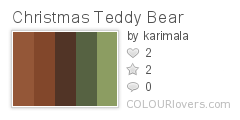
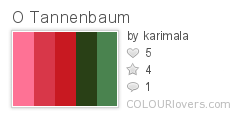
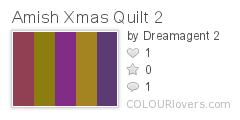
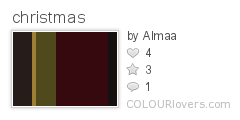
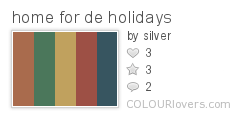
In color tradition, green & red is a forbidden color combination, yet it is front and center every year around Christmas. Of course, this is perfectly acceptable as we believe you can do no wrong with color. But seeing the same two shades paired together year after year can get a bit drab. So, maybe these palettes from the COLOURlovers groups Christmas Palettes & Ouch! will inspire you to create your own christmas palette in years to come.

Christmas_Teddy_Bear Fruit_Cake

O_Tannenbaum Amish_Xmas_Quilt_2

Even_TemperedScandinavian_Xmas

Official_Christmas drunk_christmas

christmas home_for_de_holidays

2009年12月25日星期五

Christmas Color Legends  

This is a guest post by Speakin_Colors.

The Robin Redbreast


Among the many animals associated with Christmas, there is one which features extensively on cards, wrapping paper, cake decorations and crackers: the Robin Redbreast. The robin appears in many Christmas motifs even though it is extremely rare to see a robin at Christmastime since it is not precisely a winter animal. So why is it so popular? The answer lies in its red breast:

2237123651_315e4b2987
foxypar4

”The robin has become strongly associated with Christmas, taking a starring role on many a Christmas card since the mid-19th century. The Robin has also appeared on many Christmas postage stamps. An old British folk tale seeks to explain the Robin's distinctive breast. Legend has it that when Jesus was dying on the cross, the Robin, then simply brown in colour, flew to his side and sang into his ear in order to comfort him in his pain. The blood from his wounds stained the Robin's breast, and thereafter all Robins got the mark of Christ's blood upon them. An alternate legend has it that its breast was scorched fetching water for souls in Purgatory. The association with Christmas, however, more probably arises from the fact that postmen in Victorian Britain wore red uniforms and were nicknamed "Robin"; the Robin featured on the Christmas card is an emblem of the postman delivering the card”. - wikipedia

2009年12月24日星期四

The Sorry State of Web Design Education  

A couple of weeks ago Wired Sussex invited me to a debate on the standard of design education in the UK. Being a topic incredibly close to my heart I literally jumped at the chance to participate. In order to create a sense of drama, the event pitted three designers against three educators in a heated and passionate discussion on the quality of design education in our industry.

I started by citing the recent ALA survey which showed that only half of the people polled felt that education was relevant to their work. For such a highly skilled profession, this is pretty shocking. However it’s understandable when you consider that most mid-to-senior level practitioners don’t hold a relevant degree as such things didn’t exist when they entered the profession. What really struck me was the response from those aged 19 and younger, 75% of whom felt education had little or no value. The statistics would seem to indicate that the education system is failing people at the point of their lives when it matters the most. From my own anecdotal experience I’d have to agree.

For the last 18 months Clearleft has been running an internship program to give young designers the practical experience they need. During that time I’ve interviewed dozens of people and the stories are almost always the same. Passionate designers and developers trapped in outdated courses where they often end up knowing more than their lecturers. One such student writes…

“The course is mainly just covering everything I have already taught myself. I’ve talked to my lecturers about this but none of them have worked in the industry, (worryingly) some are teaching themselves the stuff we are meant to be learning as they go so that they can teach us. “

Sadly, rather than being an anomaly, these type of comments have become par for the course. Consequently I’m seeing more and more young people eschew higher education in favour of the workplace. As somebody who understands the value of good education and looks back on their University times fondly, I think this is a sorry state of affairs.

So what has gone wrong? Well, for a start I see a lot of generic “web design” courses placing too much attention on tools and technology. Rather than teaching people Flash, Photoshop and Dreamweaver, we need to teach design fundamentals like grid layouts, typography and colour theory. We need to create students that are connected to the medium and have an understanding of the provenance of their craft; students who are schooled in critical thinking, who can deconstruct ideas, analyse briefs, solve problems and critique solutions. Just because you’re a digital designer doesn’t mean everything has to be digital, so we need people who can sketch out concepts, articulate their reasoning and defend their decisions both written and verbally.

In short we need to create good, well rounded designers.

Now I know we can do this as I’ve seen it happen in other areas. The UK has some of the top fashion schools in the world, producing graduates of outstanding calibre. We’ve got graphic design schools staffed by some of the top names in the industry, and product design schools creating our next generation of innovators. So why don’t we seem able to do the same for the world of interaction design?

More on this and other subjects soon.

2009年12月23日星期三

Christmas Decor: 6 Non-traditional & Colourful Options  

This is a guest post by Speakin_colors.

The magic of the Christmas season is reflected in the warmth of the family gatherings and the strong impact of tradition. More and more people, however, are growing increasingly tired of the conventional customary Christmas decor. The following ideas offer original variants while retaining the Christmas spirit:

The minimalist option

Both simplicity and functionality are highlighted in the minimalist tendency. A metal fruit holder filled just with nuts and placed on a table made of glass and metal can achieve the perfect minimalist festive atmosphere. White lillies, gardenias and white orchids floating in a crystal vase, red and green crystal wine glasses and red and white ceramic spheres on a red tablecloth complement this option in which unpretentiousness is the key element.

2683116057_27bf7c08a0
Viri G

The natural option

Nature acquires a predominant presence by using natural elements: glamorous apples decorated with red ribbons hanging from the Christmas tree, centrepieces full of dried flowers and fruits, ornaments having unexpected colours (turquoise, lime green, fuchsia, kiwi green, ocean blue and watermelon pink), sea-inspired designs and starfish of different sizes instead of traditional baubles…

2009年12月22日星期二

The Most Colorful Part Of The Holidays?  

What's the most colorful part of your holiday?

Over indulging (mostly on wine) relatives?...Getting the same gift you got last year, and still having found no use for the last one?...The mound of wrapping paper headed for the landfill?...Forgetting to get a gift for one of your nieces, cousins, siblings?...Holiday sweaters!?

There certainly are many to consider. For me, it's the extravagant  christmas light displays and ~adorning~ lawn ornaments.

20 Extravagant Lighting Displays

Christmas_Lights

3147113174_ab7faeb6a5
The Brain Toad

2009年12月21日星期一

Don't Forget To Take Your Daily Dose Of Color  

As a reminder to "eat your daily recommended dose of color," Tattfoo Tan, an artist whose work "seeks to find an immediate, direct, and effective way of exploring issues related to the individual in society... Through the employment of multiple forms of media," developed the Nature Matching System as a public art project in New York City. The Nature Matching System (NMS) was conceived in an effort to spread awareness and promote the health benefits of eating colorful fruits and vegetables.

NMS â€"Nature Matching System was developed by Tattfoo as a reminder to consume your daily recommended doses of color. The shades of color displayed at farmers’ markets are more than skin deep, reflecting the inner potential of every fruit and vegetable; intense colors might even be called nature’s nutrition labels. They get many of their colors from phytonutrients, compounds that play key roles in health and reduce the risk of heart disease and cancer. The more colors come together at a meal, the better. Sadly, marketers of junk food apply the same technique used by nature to pollinate seed to their nutrition-deprived product. Color is a device that can do good or be deceptive and ensure the pollination of unhealthy eating habits. The colors on the placemat shown below are all actual food colors, taken from photographs of various fruits and vegetables. Match your meal to the placematâ€"it is truly a rainbow connection.

Disposable Paper Placemat

NMS1

2009年12月20日星期日

Interior Color + Design Trends: otom  

From your home & office to your favorite restaurants & shops, color inspiration is everywhere. And since color trends change more often than once a season, and color lovers are constantly looking for inspiration, we want to help organize your color world, and together, explore further into the world of color. With that in mind, we want to know what spaces inspire you. Send us your inspiring interior links, images & designs, and keep spreading the color love.

4175782894_b1758148a9
interiors-_otom

Restaurant Interiors

otom

otomrestaurant.com

Located in Chicago's Fulton Market district, otom's contemporary menu hosts a selection of "creative comfort food." otom's interior features a main dinning area that can accommodate 60 and a bar/lounge for 30. Multi-color drapes, exposed brick wall, and multiple recessed lighting features all add to this eatery's ambience.

2009年12月19日星期六

Vintage Color & Design: 70's Super 8 Film Boxes  

Inspiration from 8mm Super 8 film covers. This great collection is from Super 8 Hobby, and found via World Famous Design Junkies.

donald-
Disney_Character_8mm
3536041189_621d679c4b
Equinox
amazonas2
crtr_frm_blck_lagoon
CASTLE-FILMS-No
Rendezvous_Gemini7-6